vineri, 7 noiembrie 2014

Safety in numbers

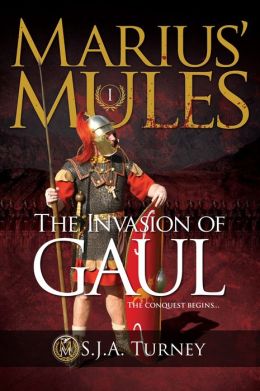
S.J.A. Turney - Marius' Mules VII: The Great Revolt, Victrix Books, 2014

Photo credit link
Reading the first book in the MM series has triggered a series of events that has re-ignited my passion for the Roman world possibly stronger than it ever was before. I have read Caesar's De Bello Gallico in its entirety and had a bite of De Bello Civili, enough to realise that the HBO series Rome, which I recently started watching, is a rather close to the letter fictionalization of Caesar's account. I did not finish the great man's commentaries as Simon sent me MM7 one week before its official launch. Honoured and humbled by the gesture, I have made it my mission to read and review the book in time for the launch. Being the behemoth of a book that it is, I have failed, but I hope this review of mine will still serve some marketing purpose. Hence, here's my two cents:

Let me start with a huge spoiler: Caesar has won the war on Gauls. The readers that don't know that are very lucky, as they will have on their hands a very tense historical novel, whose conclusion hangs on a thread up until the very end. For the rest of us, the point of interest rests more with the journey than with the destination. Of course Caesar or Marc Anthony survive and, to an extent, we all know what happened to Vercingetorix in the aftermath of the battle of Alesia, but there's uncertainty over the faith of our main (fictional) heroes. There are a lot of layers to this book and I guess it speaks to different audiences in different ways: for teens and pre-teens it is an excellent introduction to the Roman world and they should certainly read this or something similar before they take on Gibbon; for laypersons with little to no interest in history it does the same job the popular science books do, in that it teaches a few history lessons while being a very entertaining read; for readers familiar with Roman history and Julius Caesar's writings, it puts a lot of flesh over the skeleton of a book that De Bello Gallico is. Even within this last category we could make a separation between historians - interested in dates, numbers and hard facts, military historians - curios to find out about battle tactics, weaponry, siege engines and the like and re-enacters of one sort or another - interested in costume, way of life, way of thinking. There really is something for everyone in this heavily documented account of Caesar's most important campaign in Gaul that, although follows very close the official version of the emperor-to-be, it is over 40 times longer.

Now, there's one thing to be said about Gaius Julius Caesar: the man excelled in everything it did and his merits far expand beyond the limits of any one area. He was a masterful soldier, commander, politician, historian, writer, sociologist and perhaps many others. Although my first serious introduction to character was Alexander Dumas' less-than-flattering account in the namesake book, the more I learn about the man, the more I appreciate it. And there is a lot to be said about how, despite all his merits, he is such a controversial and often negative character of history. However, for the purpose of this article, let us concentrate on just his writing merits. Despite his Commentaries being first and foremost a journalistic account for the senate and the people of Rome, the man certainly kept a view to posterity when writing it. He must've had. There are hints and smells in his writings that is talking not only to his contemporaries, but possibly to many future generations. And while it certainly it does not pass as what it would be called entertaining writing nowadays, there is a clarity and concision in his style that leaves a lot to be admired. Besides, at times his writing is no less than a literary master-stroke, to the point that poor Aulus Hirstius, who wrote the eighth and last book of De Bello Gallico says about the other seven that "no composition was ever executed with so great care, that it is not exceeded in elegance by these Commentaries".

Writing about these same events and willingly submitting your writing to the inevitable comparison with that of the great man is an enterprise bold if nothing else. But Simon does a beautiful job at it and, with the understanding of the difference in purpose, it does exceed Caesar's merits in ways which more than make up for the ones that he falls short in. For example, here's Caesar speaking to the troops in the wake of the reckless failed attack on the walls of Gergovia: "That as much as he admired the greatness of their courage, since neither the fortifications of the camp, nor the height of the mountain, nor the wall of the town could retard them; in the same degree he censured their licentiousness and arrogance, because they thought that they knew more than their general concerning victory, and the issue of actions: and that he required in his soldiers forbearance and self-command, not less than valour and magnanimity."

And here's Simon: " Indeed, I am, on a base level, proud of the daring and fearlessness of you all. For, though by your arrogant insubordination you brought about our defeat here, the manner in which it occurred will become a tale of heroism someday. For no terrain or enemy or even the walls of that great oppidum stopped you when your blood was up. So, from this, take away not a loss for our army, but the knowledge that only our own pride and fierceness brought about our downfall, not the strength or daring of our enemy."

Which one is better? That is for each man to decide. I will say two things about this particular moment:

1. while I see nothing wrong to copy, at times, the general's words letter by letter, Simon tends to avoid that thinking probably it would be in some ways dishonest or unethical. Likewise, he considers it his duty to stick to the letter and to the official account at times when, to my mind, there is a lot of room for fictionalization, fantasy and what if-s.

2. there is something in Simon's books that is entirely missing from Caesar's: the view from the lines, from the other side. Simon continues: "There was almost an imperceptible straightening of the backs". It is, in my opinion, the big plus of the Marius' Mules books. This kind of detail that makes the reader really see the times and events depicted and it is as close as you can get to being an eyewitness from a man which, although has not been an eyewitness himself, he sure wishes he was. It is also what makes the Marius' Mules books - like I said before - only one step away from movie scripts and I sure as hell would like to see this series brought to the screen.

There is a huge gap in my readings, as I have skipped from the first book in the series straight to the seventh which, of course, makes me wonder what happened to characters in-between the 5 years that I do not know of. And when exactly has the series gone astray from De Bello Gallico so that it makes Simon say in the note at the end that this seventh book is a return to the origin of the series. In comparison - strangely enough - I find Fronto a much less likeable character now that he was in the first book. Which is good, I like myself a good anti-hero. It is admirable from the author to try and show things from different perspectives, including the Gauls in the fist person depiction of events. However, it is clear as daylight that there is a lot less hard historical information available about the Gauls than it is about the Romans. And it shows in the book, and this is one instance where Simon could have babbled on about gods, about Ogrimos, master of the dead and how he's viewed and revered by Gauls and their druids or how he's entered the Gallic pantheon via Greece. Or about anything, really. But, because I spoke of gods, I might have touched on the wrong topic as the author himself is clearly a deeply secular man, with a strong conviction that there is no superior order to the world than the one we see and understand. And he borrows this feature to the two main characters: Fronto and Cavarinos the Gaul. Fair enough.

For comparison, he takes all the liberties in depicting the German warriors and their fighting style - to the point where they seem to be the deciding factor in two of the key battles, which both makes them one of the most colourful, vivid and likeable presence in the book and betray where the author's true interests lie: of the categories of readers described above, he's one of the re-enacters. Well, just look at the man's facebook profile picture:
Simon Turney
For some reason, I particularly liked Masgava, the big Numidian mercenary, ex-gladiator and one of Fronto's bodyguards. I would be really curios on reading an account of the events from his prospective, as a complete neutral and alien to this fight and because of the exotic element he brings. The short forays into the minds of Gauls fighting against Gauls I found particularly attractive.

I realise that throughout my review I haven't yet recommended the book directly. Well, of course I recommend it. It is a hugely entertaining reading and you can get anything but bored. If anything, it is a bit too dense and one might be left with the impression that it is nothing more than a series of sieges. By the time we get to the siege of Alesia, I found it hard to recall what happened at Avaricum or Noviodunum. In fairness, I think the siege of Alesia alone would have been deserving of a whole book and I reiterate the idea that this one book could easily have been split into two. Nevertheless, the reader is not forced to race through it like I did and is free to take it all in at its own pace. Oh, and do not be afraid to use those maps in the beginning. They are another great feature which is sorely absent from Caesar's journals and incredibly useful in Marius' Mules. Unlike in the first book, I have now learnt to refer to them every few pages, and they are incredibly useful in figuring out the battle plans and strategies that the characters talk about.

Now, get your asses to Amazon and buy the book. Link is in the book title at the top.

Excerpts:

2316/8961: "if ever there was a true and just cause for the invasion of Gaul, it had been to rid humanity of the inhuman sound of the carnyx."

5740/8961: "retrospective wisdom is a useless gift"

8394/8961: "The horses - Germanic steeds of their own selection - trampled the unwitting and more than once Varus saw the animals lunge down and bite the enemy, something he'd never seen a horse do in his life."

joi, 25 septembrie 2014

Short Guide to Digital Photography

Although I am by no means an expert, I have been asked quite a bit about digital photography lately. Here's an article intended to be a quick reference for the people who asked me and for others who might stumble upon it. I will try to make it both short and comprehensive. All information in the article comes from my own experience and I'm sure there are better guides out there. I use a Canon 7D but the parameters of a photo are the same regardless of the instrument. And these parameters are:

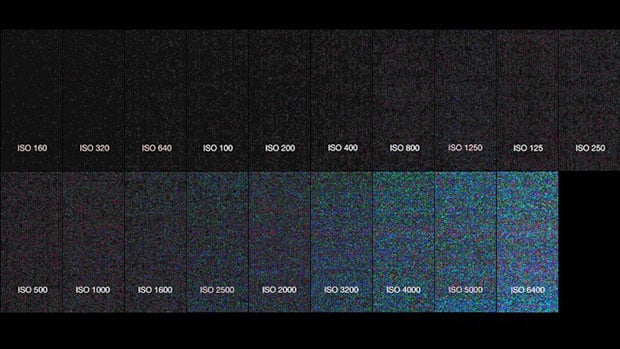
How image noise looks like
Sensitivity (ISO) - on film, it refers to the density of thickness of the strip of film. In a digital medium, it is simply a measurement of the sensor's sensitivity to light. The higher the ISO, the bigger the sensitivity, so ISO will be increased when the amount of light is low. Increasing the ISO, however, results in image noise (granulation), so ideally you want to work with as low an ISO value as possible (ISO 100 is ideal, but not always possible, depending on lighting conditions). For Canon DSLR, it is recommended to use ISO values that are multiples of 160.

Also look up motion blur
Shutter speed (exposure time) - represents the length of time for which the shutter stays open, allowing the sensor to receive light. It is usually represented as fraction of a second. (1/10, 1/25, 0' 5" or 1/2). Obviously, the longer the time, the more light the sensor so for low light conditions you will want to use a longer exposure time. However, for long exposure times both the subject and the camera have to be still (ideally the camera would be on a tripod), otherwise you will get the ghost effect in the photo, or the full bright white areas. If the subject is moving fast, such as athletes at sporting events, then you will want the exposure time to be as short as possible while still getting enough light, so that the picture is crisp and there are no blurred parts. Normally you should keep the exposure time defaulted at 1/25 (which is close to the film camera speed of 24 frames per second - fps) and adjust according to the light conditions.

Depth of field illustrated
Depth of field (focus range) - The focus (not to be confused with focal distance) is defined as the distance from the lens at which a point object produces a point image. While precise focus is only possible at one distance, on each side of the focus plane there will be an area in which the subject will appear to be sharp and focused when viewed at a maximum image resolution. This area is called the depth of field. It varies according to the focal distance and the aperture.The bigger the focal distance, the further away the focus plane will be and the lower the aperture (the higher the f/ value), the bigger the depth of field. If you need a small depth of field (shallow focus), such as for a portrait, you will used a high aperture value (say f/2.8) and shoot from close by. If you need a big depth of field (deep focus), such as for a landscape, you will use a small aperture (f/16, f/22) and a focal length dictated by the distance to the closest object that needs to be in focus.

Aperture values represented
Aperture (focal ratio or t-stop) - it is represented by a number in a logarithmic series preceded by f/ (f/1.2, f/1.4, f/2, f/2.8, f/3.5 .. f/28) and it shows how big the hole through which light gets into the sensor will be. Aperture is probably the most counter-intuitive parameter of the camera and maybe the most important. The higher the f number, the smaller the aperture, so the less light will get into the sensor. This means f/1.2 is the biggest possible aperture, while f/22 means a very small aperture and should only be used in very bright sunny weather. While the crispiest images will be obtained with an aperture of 4-5.6, the value of the aperture used should be determined by the quantity of light available and by the depth of field required. For the aperture greatly influences the depth of field, them being in a reverse proportionality: the higher the aperture, the smaller the depth of field. f/1.2 will have the smallest depth of field, while f/22 will give you a huge depth of field. While I have used here the f/1.2 value, you will notice most prime lenses will have the biggest aperture set at f/2.8, while most zoom lenses have it at f/3.5. Meaning the aperture is a characteristics of the lens, not of the camera. But the point is: the more light, the smaller the aperture, the bigger the f/ value.

Focal length is given as a millimetre value
Focal length (zoom value) - is the distance between the image capturing medium (film or sensor) and the optical centre of the capturing lens. It is a characteristic of the lens, obviously, and on zoom lenses is indicated by its minimum and maximum values. The focal length dictates the field of view angle (the smaller the focal length, the bigger the fov angle) and the distance to the focus plane (the smaller the focal length, the smaller the distance to focus). The human eye has a focal length of about 35-40 mm, so this is the focal length to use if you want a 'realistic' field of view. A low focal length value will give you an optical aberration known as fish eye effect (bending of the edges of the image) which can be more or less obvious depending of the lens. Whenever possible, use prime lenses (an unique focal length) rather than zoom lenses (variable focal length), as they contain less glass and therefore give you more definition. Likewise, try and get closer to the subject rather than using the zoom, as using the lens at its smallest focal length position gives you the greatest control over the image.

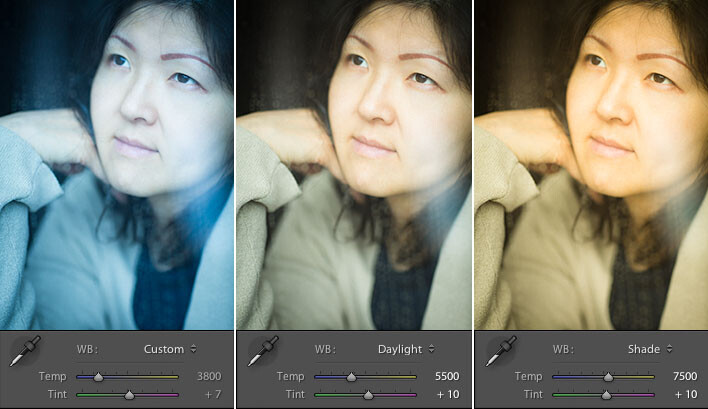
The three colour palettes
White balance (K temperature) - is a parameter specific to digital imaging and it is defined as the temperature at which a black object should be heated to give the white colour on camera. This is dictated by your light source and it dictates the colour palette of your image. A low K temperature results in warm, yellow tones, for the naked eye while a high colour temperature results in cold, blue tones. While there are standard values for various light sources (3200K for tungsten lighting, 6400K for HMI lighting and standard outdoors), the white balance will be chosen according to the desired look of the final product. For a natural look you can either experiment with different values or use the AWB setting (auto white balance - this uses the camera specific algorithm to determine the k temperature). For a vivid colour palette (yellow tones), the white balance should be set to a higher value than the one of the light sources, while for a cold, blue, unnatural colour palette, the K temperature should be set to a lower value than the light sources.

These 6 are the most important features of the image, along with the image resolution (number of megapixels), which should always be set to the highest possible. There is a lot more to say about each of them and there are more parameters than this to a digital image. I have tried to cover the basics, although I have also provided links that go into more detail. It is my belief that understanding how these 6 concepts work and how they alter your image will be enough to put one on the path to become a professional photographer.

miercuri, 17 septembrie 2014

Not about Marius, nor Mules

S.J.A. Turney - Marius' Mules I (The Invasion of Gaul), CreateSpace, 2013

Nowadays, I hardly ever read fiction. And by no means would I have read Marius' Mules if it wasn't for an arbitrary series of circumstances: a Facebook advert was offering it for free and I wanted to learn how to use and to test how easy I find the iBooks application on my new iPhone.

Everything cliked and I started reading it. And in the course of doing so, I felt cheated a few times by this book: at first, I noticed it is the first one in a series, with a drug dealer type "first one free" technique. I feared I would get to the end only to be told that I need to buy the next book. Well, it's not like that. The Invasion of Gaul is a very round novel, with a classical beginning and end structure and a strictly chronological depiction of events. The ending is even built up, as the characters talk about it throughout. I am now however itching to read the next in the series, not because anything exciting is just about to happen to the heroes, but because I have come to know and like them and I have become too drawn into their lives not to follow them further. Besides, the price of the next books in the series is minuscule, and the author makes a point of it:

I do, however, have control over the price of the electronic editions, and I have deliberately set them as low as the publishing system will allow. The reason for this is that I am passionate about both reading and writing, and I believe that books are becoming too pricey. If things continue with the current trend, people will stop reading unless they're quite wealthy, and will rely on TV. I would rather lower the price and encourage people to read.

Next thing I came to notice is how close the action in the books follows Caesar's De Bello Gallico. A quick research and a note at the end of the book reveal the author's full disclosure though: his purpose was to fictionalize Caesar's dry historical account in order to make it readable for the contemporary world. I'm not sure how I feel about this: while I feel it is a laudable enterprise,  I think less of myself if I need fictionalization of the classics in order to access them. That's why I just started reading De Bello Gallico and will take up on Fronto's next adventures as soon as I finish it. So I'm guessing it's good then: a book that makes me read another book is always a good sign.

I do prefer fictionalizations in the style Charles Frazier writes, heavily documented and filling in with licences only when historical sources are mute. I did expect the main character, Fronto, to be drawn from some document or funerary stella and was a bit disappointed upon finding out it has not been the case. But Mr. Turney is excused considering this novel is spun solely out of passion for ancient Rome and he is not (or was not, at the time of writing) a professional writer.

That is not to say Marius' Mules is not heavily documented: on the contrary, the reader will be introduced to a lot of Roman terminology, way of thinking and military strategy. So much so that the book reminded me at times of Sun Tzu's Art of War. And I was always itching to play Rome: Total War and recreate Fronto's battles. It is just the characters that are plucked out of thin air, but they're all rounded out so well that it makes them all entirely credible.

An author's stated intention and a big plus of the book is to look at the men behind Caesar's successes and how they contributed to them. It is obvious that Julius Caesar could not have become the great commander he was without a number of supporters, but it is very easy to overlook the people whose name left no mark on the historical records.

A fault of the story is the chapter investigating the low morale of the army just before meeting the representatives of the Aedui tribes, and for now I cannot tell if the sub-plot is too thin because of the writing, because of the sources or due to a discrepancy between the Roman and the Western contemporary way of thinking. I did protest throughout about some lines that sound very British and very out of place when said by a Roman soldier, but I guess there's no getting around this: a Roman soldier would have an equivalent that would make little to no sense when translated literally from Latin. Another way around this would have been writing the whole damn book in Latin, but then we'd be talking about a completely different sort of an enterprise.

Just one last mention, and a very striking one at that: there is a very strong cinematographic feel to the book. Movements and costumes are described in so much detail that it would be a struggle not to view the action as a motion picture in the reader's mind. This book almost screams about being turned into a TV mini-series. I hope it will be, sooner rather than later and I would make an attempt at doing it myself, would it not be for the historical costumes and the huge number of extras involved, details that spell big budget production all along.

And that's pretty much it. I will probably have to say a lot more about not only Fronto, but also the likes of Aulus Crispus, Balbus or Ingenuus at the end of the seventh book. I am convinced that, would I have read this as a child, or even in my teen years, Fronto would have become one of my heroes, along with Winnetou the Apache, Tarzan of the Apes, D'Artagnan or Robin Hood. I can only hope that there is still a generation of kids out there who get their heroes from fictionalized history rather than Disney merchandise.

And I'm not sure if Marius' Mules reconverting me into reading fiction is a good thing or a bad thing.

marți, 15 iulie 2014

Don't cry for me Argentina

Germania - Argentina 1-0

"Am vazut la acest Mondial 32 de echipe iar la final, mai e nevoie sa va spun? Nemtii au castigat." Asa si-a incheiat Gary Lineker ultima emisiune din Brazilia, cu zambetul satisfacut al celui care a dat lumii o fraza memorabila.

"Fotbalul e un joc simplu, in care 22 de oameni alearga o minge pentru 90 de minute iar la final nemtii castiga intotdeaua" e vorba memorabila, dar in momentul in care a spus-o Gary Lineker era plin de naduf pentru ca, in ciuda faptului ca a batut aproape de unul singur Camerunul in sferturi si a egalat la 1 dupa golul lui Breme din semifinale, n-avea sa stie ce gust are cupa mondiala. Daca imi pare intrucatva rau pentru acea generatie frumoasa pe care Anglia a avut-o in 1990, mi-ar fi parut cu siguranta rau pentru generatia lui Lahm, Klose si Schweinsteiger daca s-ar fi retras din fotbal fara sa castige un Mondial dupa ce au pornit mai intotdeauna printre favoriti. In perspectiva, e surprinzator ca Germania n-a mai castigat de 24 de ani, dovada ca nemtii nu castiga chiar intotdeauna, ci mai degraba arata ca si cum ar castiga.

Mario Gotze nu era nascut ultima data cand au devenit campioni mondiali, tara nu era inca reintregita si, din 1954 pana acum n-a trecut niciodata atat de mult timp intre doua editii de cupa mondiala castigate de Germania. Nemtii au un in schimb un dar: sa distruga sperantele echipelor populare: in 1954 toata lumea credea ca Ungaria lui Puskas o sa castige; in 1974 Cruyff conducea o echipa olandeza admirata de toata lumea spre o infrangere in finala; in 1990 nemtii au castigat in Italia, unde gazdele aveau mari sperante. Drept, italienii s-au razbunat in 2006 castigand in Germania. Iar acum... umilinta administrata Braziliei n-o sa fie uitata prea curand.

Acestea fiind spuse insa, as zice ca Brazilia a terminat Mondialul cu bine. Sigur, scorul nu e ideal si e nevoie de ceva timp ca sa capatam o mai buna perspectiva, dar gazdele au ajuns in careul de asi cu o echipa in care nu pareau sa creada la inceputul turneului. Spania, Anglia, Italia au poate mai multe motive sa fie ingrijorate decat Brazilia.

Finala mica... cui i-a pasat vreodata de finala mica? In definitiv, un brazilian a zis ca locul 2 e primul invins. De-asta meciul cu Olanda n-a contat nici pentru restabilirea moralului, nici pentru nimic. I-am vazut pe olandezi bucurosi ca au castigat meciul, dar esecul lor impotriva Argentinei e comparabil cu al brazilienilor in fata Germaniei. Tot ce pot sa spun in apararea lor e ca felul in care a intrat ultimul penalty, al lui Maxi Rodriguez e asemanator cu felul in care n-a vrut sa intre ultimul penalty a chilienilor. Cum am mai spus, uneori lucrurile astea nu se decid pe teren, ci undeva deasupra, poate chiar deasupra capului lui Christ the Redeemer.

Iar argentinienii mi-au dat impresia ca mai degraba s-au strecurat pana in finala: cinci meciuri castigate la limita (dintre care unul cu Iran, cand au dat gol in ultimele minute), unul la penalty, iar in fazele eliminatorii au avut de infruntat Elvetia si Belgia. Dar se castiga si asa, si chiar m-am speriat putin ca, daca prin cine stie ce intamplare Argentina ar fi castigat, comparatiile dintre Messi si Maradona nu s-ar mai fi oprit cel putin 4 ani. Si-asa sunt greu de oprit. FIFA era pregatita, am vazut cu uluire cand Messi a primit premiul de jucatorul turneului. Serios??? Nu Muller, nu Robben, nu Rodriguez... Messi? In semifinala cu Olanda cel mai bun jucator a fost Mascherano, in finala cel mai bun a fost Higuain. Pana si Palacio a jucat mai bine ca Messi in finala, si a intrat in minutul 78. Messi a fost cel mai bun cu Iranul, probabil asta a cantarit mult in decizia FIFA. Pana si Maradona a zis ca decizia e ridicola. Dar e normal, Maradona cu toate problemele lui cu abuzurile de substante dubioase are un cap mai limpede decat Blatter.

Eu unul doar m-am bucurat  sa-l vad plangand pe Messi si am tipat putin la televizor pentru ca regizorul de transmisie a fost destul de zgarcit cu prim-planurile. Dar iata imaginea de 1000 de cuvinte:

Rezolutie mica si relativ greu de gasit pentru ca o cautare dupa "Messi crying" aduce multe rezultate in tricoul Barcelonei unde, se pare, Messi plange cam in fiecare meci. Dar probabil ca asa vin penaltyurile. Nu stiu, n-am mai urmarit campionatul spaniol de cand a plecat Ronaldinho.

Si cam asa, cu un gol tarziu al lui Goetze si o reeditare a finalei din Italia '90 s-a spus povestea mondialului din Brazilia. Unul frumos, cu multe goluri, organizare excelenta si multe fete frumoase in tribune. Probabil ultimul de felul asta pentru cel putin o generatie. Ne vedem peste 4 ani la finala din Rusia, in Kiev.

miercuri, 9 iulie 2014

Desordem e desastre

Brazilia - Germania 1-7

E dincolo de cuvinte. Nici nu stiu de ce mai incerc. Tot internetul vuieste, va fi o sursa abundenta de memeuri pentru anii ce vin si nu-mi amintesc ca vreunui altui eveniment sa-i fie dedicat atat de mult spatiu din news feed. Practic e singurul lucru despre care se vorbeste acum si probabil ca e la paritate, pe canalele de stiri, cu 9/11. Nu-mi amintesc vreun alt eveniment din timpul vietii mele care sa aiba un impact imediat si la fel de puternic in constiinta colectiva.

Nu m-am gandit prea mult la ce echipa e mai buna, la cine o sa castige sau la cine as vrea sa castige. Ok, inainte de mondial voiam sa castige Brazilia, dar dupa ce mi-am vopsit sufletul portocaliu nu mi-a mai pasat asa tare. Fara Neymar? Am zis in postul trecut, nu credeam ca e asa important. Thiago Silva? Ok, e ceva mai dureros, a fost liderul echipei si e un fundas pe care te poti baza, spre deosebire de David Luiz. Dar nemtii au si ei, cel putin pe hartie, o aparare instabila iar Neuer a avut un campionat mai degraba slab. Ei, as! Azi a fost perfect Neuer, n-a gresit nici macar cand un alt portar cu un suflet ceva mai milos ar fi lasat 1-2 goluri, pe la 5-0.

Cat despre nemti? Ei bine... nemti. Au destule clisee in dreptul lor ca sa ma mai apuc inca o data sa repet din ele. M-am gandit ca meciul cu francezii a fost destul de plicticos, dar stiu ca si pitonii, crocodilii si alti cativa pradatori isi captureaza prada dupa care o lasa sa se zbata pana la moarte. Asta o fi directiva de pe banca tehnica, mi-am zis dupa primul gol, teribil de asemanator cu primul gol al lui Hummels din meciul cu Franta. Si tot cam dupa vreo 10 minute de joc.

Dar fundasii, unde erau fundasii? m-am mirat. E grav, asa o scapare in semifinala. Ei bine, n-a fost o scapare. La al doilea gol Klose a avut timp sa suteze de doua ori, iar Julio Cesar a fost chiar amabil sa-i reutrneze mingea cand primul sut a fost direct pe directia lui. M-am bucurat pentru Klose, care e acum fotbalistul cu cele mai multe goluri inscrise la turneele finale (16) si mi-am dat seama ca la 2-0 meciul e cam incheiat.

Ce n-am banuit nicicum era ca o serie intreaga de recorduri aveau sa mai cada pana la sfarsitul meciului. De exemplu, in urmatoarele 5 minute avea sa fie egalat recordul de goluri primite de brazilieni la un turneu final: au mai luat 5 de la Polonia, in 1938. Au castigat cu 6-5. 7 n-au mai luat pana in seara asta, si sunt rare meciurile de la mondial cand o echipa a luat mai multe: Ungaria - Coreea de Sud 9-0 (1954), Yugoslavia - Zair 9-0 (1974), Ungaria - Salvador 10-1 (1982). Imi place ca articolul asta zice ca scorul era 5-0 dupa doar jumatate de ora. Si e vorba de Zair, una din cele mai slabe natiuni fotbalistice, in conditii ostile. Nu e Brazilia, natiunea al carei nume e sinonim cu fotbalul si care e incurajata de un inimos public de 200 de milioane de oameni.

Probabil ca nemtii ar fi fost multumiti cu 5-0, dar intrarea lui Schurrle a fost o masura sadica. Bineinteles ca atacantul lui Chelsea a vrut o bucatica din prada, si a sfarsit cu o ditamai halca, doua goluri.

Ce-i de facut? Nu prea multe. Foarte greu se poate consola tristetea si umilinta pe care o simte acum publicul brazilian, si nu meritau dupa un mondial in care am vazut atata bucurie, atata pofta de viata si pofta de fotbal. Toaa delegatia Braziliei ar trebui sa-si asume raspunderea. Scolari ar trebui sa-si dea demisia imediat dupa mondial si sa reflecteze indelung daca mai poate antrena vreo echipa dupa seara asta. David Luiz ar trebui sa-si revizuiasca atitutdinea si sa realizeze ca e mai productiv sa-si faca meseria pe cat poate el de bine in loc sa arunce coate frustrate spre Klose si suturi dusmanoase spre Mueller. Si in general, echipa Braziliei ar trebui sa interiorizeze ideea ca sunt cea mai slaba generatie care si-a reprezentat vreodata tara la un turneu final. Apoi, bineinteles, ar trebui sa se reorganizeze si sa incerce sa spele din rusine cu o victorie categorica in finala mica, mai ales ca probabil vor intalni Argentina, marele rival local.

Mi-au placut imainile de dupa meci, si sunt un mare fan al acestor frumoase demonstratii de fair-play: Mueller imbratisandu-l pe Scolari, Schweinsteiger incercand sa-i consoleze pe jucatorii brazilieni, Mueller si David Luiz etc. Dar 7-1 ramane iar cei care-si amintesc mondialul din 1950 raman neconsolati.

duminică, 6 iulie 2014

Life is Krul

Olanda - Costa Rica 0-0 (4-3 pen.)

S-a mai vorbit, inclusiv pe blogul asta, despre convergenta preferintelor fanilor United spre Olanda la mondialul asta, si e un fenomen, mi se pare, mai mult decat natural. Nu poate decat sa ne bucure in contextul asta giumbuslucul lui van Gaal cu schimbarea portarului special pentru loviturile de departajare. Bineinteles, pentru ca a functionat, presa il numeste acum "strategie de geniu", "inspiratie tactica" si mai stiu eu ce superlative. Numele lui van Gaal o sa ramana probabil de acum inainte pe toate schimbarile de portari facute special pentru loviturile de departajare. Dar daca ne gandim putin lucid, miscarea are sens in totalitate: avem doi portari de valori apropiate, dintre care unul e obosit dupa 120 de minute de joc, iar celalalt a pertecut respectivele 120 de minute observand adversarii. Portarul de rezerva isi permite si luxul de a se pregati in mod special pentru loviturile de departajare si, mai ales intr-un context ca asta, sa studieze obsesiv adversarii si felul lor de a executa penaltyuri. Lipsa de respect pentru titular? Nicidecum. titularul stie ca rezerva s-a pregatit special pentru asta si probabil e chiar recunoscator ca scapa de tensiunea penaltyurilor (care, oricat s-ar zice, e si pe portari cum e si pe executanti). Se tot vorbeste in fotbal de ceva vreme de adancimea lotului si valoarea bancii de rezerve, dar asumptia nespusa era ca portarul de rezerva e inferior valoric titularului. Ilustrativ e cazul lui Courtois, pe care Chelsea il considera valoros, dar nepregatit inca sa-i ia locul lui Cech. Dar nu-l pastreaza in lot, ci il imprumuta la echipe care il joaca, si are dileme morale cand trebuie sa inscrie impotriva lui.

Povestea de mai sus se numeste Despre Tim Krul care a furat capul de afis de la o prestatie absolut magnifica a Costa Ricai in acest meci in special si la acest mondial in general. Putin cam lung titlu, stiu, dar e pe masura parcursului Costa Ricai. Am zis in postul trecut ca majoritatea povestilor mor in optimi, dar intotdeauna ramane cate un vis frumos de ucis in sferturi (Romania '94 cineva?). Sigur, aud din spate ceva despre Bulgaria '94 si Coreea de Sud 2002. Dar primul a fost un accident, al doilea a fost comandat de sus. Daca e sa accept vreunul, atunci accept Turcia 2002, dar turcii au avut atunci o echipa tare frumoasa.

N-aveau cum sa se califice costaricanii. Sigur, au jucat extraordinar, dar olandezii au controlat jocul cap-coada. Nu neaparat in teren, posesia de 65% si superioritatea paselor completate puteau fi spulberate de ocazia imensa a lui Urena din ultimele minute de prelungiri. Dar mental, olandezii au fost tot timpul stapani pe ei si increzatori in locul lor din semifinale. E o scena rara cea in care Robben, in a doua repriza de prelungiri se imbratiseaza si shcimba amabilitati cu antrenorul advers. Iar pe banca Olandei, numai fete calme: van Gaal si Kluivert isi vad de notitele si de iPadurile lor, fara nici un semn de nervozitate. Pe Jorge Luis Pinto l-am vazut in cateva randuri certandu-se cu arbitrul de rezerva. Sigur, pe fetele fotblistilor olandezi se citeste si oarece frustrare, dar asta e in cea mai mare masura meritul lui Keylor Navas. O fi ceva in apa, in aer sau in pamant in Costa Rica, de creeaza portari de calibrul asta. Sper sa mai auzim de Keylor Navas si dupa mondial, aud ca Atletico negociaza cu Levante pentru el.

As vrea sa inchei cu un gand pentru sarmanul Michael Umana. Iata gandul:
Mingea a zburat deja, meciul e pierdut, olandezii incep alergarea spre Krul iar rezervele lor au intrat deja in teren. Aia 50 de metri pe care ii are de parcurs pana la coechipierii lui trebuie ca sunt ai dracului de lungi.

Argentina - Belgia 1-0

Contrastant cu meciul de seara, asta al argentinienilor a fost relativ plicticos. Poate lucrurile ar fi stat altfel daca nu intra asa repede golul lui Higuain, dar n-o sa stim niciodata. Au jucatori buni belgienii, dar ma indoiesc ca formeaza o echipa buna. Condusi cu 1-0, ma asteptam ca Hazard sa incerce mai mult, macar spre finalul meciului, dar abia daca l-am vazut in cele 75 de minute pe care le-a petrecut pe teren. Iar daca si-a pus baza in Fellaini, Wilmots scade mult in ochii mei, chit ca are acum amintire de la mondial poza cu Klinsmann. Mare minus mi s-a parut Kompany, care n-a prea stiut in nici un moment cu ce se ocupa atacantii argentinienii, inclusiv in faza golului. Iar daca e cineva de remarcat de la belgieni, poate Witsel o merita cel mai mult, desi si-a ratat momentul de glorie si a trimis mult peste poarta o minge ideala de la 20 si ceva de metri. Ce-ar face Jamie Rodriguez?

Brazilia - Columbia 2-1

Pai Jamie Rodriguez e deja acasa. Pe nedrept, ar zice unii, dar aceia ar avea doar partial dreptate. Da, Columbia a jucat bine si a avut participare egala intr-un meci rapid si foarte spectaculos. Dar brazilienii ar castiga 9 meciuri din 10 cel putin, la felul cum au aratat lucrurile. Arbitraj pro-brazilian? Meh. Da, n-a fost offside la golul lui Yepes, pentru ca jucatorul in offside n-a avut de gand sa participe la faza. Dar s-a fluierat, si orice atingere de minge dupa fluier e nula, altfel Franta ar fi batut Elvetia cu 6-2. Fundasii brazilienin-au mai jucat dupa fluier, altfel probabil Yepes n-ar fi inscris. Columbia a avut un penalty, Brazilia a inscris din doua faze fixe, iar Zuniga a scapat nesanctionat dupa ce i-a fisurat o vertebra lui Neymar. Da, arbitrajul a fost prost si da, posibil ca Brazilia sa fi primit acel 5% al gazdelor de-a lungul turneului, dar meciul asta l-au castigat jucatorii, nu arbitrii. Din nou, Coreea 2002...

Thiago Silva a fost complet nemarcat la primul gol, poate de aici ar trebui sa inceapa columbienii. Meritul lor insa e ca nu s-au speriat nici de adversari nici de competitie si au jucat incredibil de deschis, ambii portari muncind cota egala cu jucatorii de camp.

Brazilienii sunt acum speriati ca l-au pierdut pe Neymar, dar desi imi pare rau de accidentarea pustiului, tind sa cred ca e un lucru bun pentru Brazilia. In primul rand, au castigat meciul asta cu doua goluri marcate de fundasi. Apoi, Hulk si Fred par sa fi inteles in sfarsit ce joaca. Si in final, cel mai important, Braziliei nu-i sta bine sa atarne de un singur jucator. Si nici nu e asta mondialul jucatorilor talisman. Ronaldo si Hazard nu si-au carat in spate echipele si nici macar Argentina n-a ajuns in semifinala doar pe seama lui Messi, desi probabil el si Robben sunt individualitatile care stralucesc cel mai tare.

Germania - Franta 1-0

La fel ca sambata, si vineri am avut un meci spectaculos si unul plicticos. La fel, cel plicticos a avut un gol rapid. Germania-Franta asta mi-a amintit de meciul dintre cele doua echipe la mondialul din '40: Germania a atacat rapid si a reusit sa penetreze defensiva adversa, instituind apoi o disciplina defensiva pe care francezii n-au reusit s-o desfaca. Daca atunci Franta a mers mai departe la jocul rezultatelor, de data asta americanii erau deja iesiti din competitie.

Cumva imi pare rau pentru francezi, au fost in forma buna si au aratat ca stiu sa joace un fotbal frumos si eficient. Dar daca n-o faci cand conteaza, se pune pentru ailalti. Poate cu exceptia meciului impotriva portughezilor, nemtii n-au rupt gura targului, dar au facut suficient sa treaca mai departe linistiti. Brazilienii ar trebui sa fie prevazatori. In tot cazul, Brazilia-Germania va fi un meci excelent, un soi de forta de neoprit atacand obiectul de nezdruncinat. Sper ca Chuck Norris sa fie in regula.

Si mai sper ca, de dragul unui record, Mirko Klose sa mai dea un gol la mondialul asta si sa fie, cu 16, golgetterul absolut al turneelor finale. Cu Franta nu prea s-a simtit in largul lui.

sâmbătă, 5 iulie 2014

Afrika Korps

Franta - Nigeria 2-0

N-am vazut meciul in direct, dar gratie minunii tehnicii moderne care se numeste TiVo l-am inregistrat si am apucat sa-l vad abia acum. Dar, pe cat de minunata e tehnica, avansurile ei dau impresia unei evolutii asimptotice. Tensiunea si emotiile traite in timpul unui meci in direct sunt incomparabile cu cele ale unei inregistrari, mai ales cand stii scorul. Iar in epoca hiperinformationalizata in care traim, e mai greu sa nu afli ceva decat sa afli. Ma intorceam acasa cu gandul ca daca nu stiu scorul as putea simula destul de bine o transmisie directa, cand ecranul publicitar din Charing Cross m-a anunta cu bucurie ca "France leaves it late to beat Nigeria 2-0". Dintr-o data prima repriza mi s-a parut relativ anosta, desi ambele echipe au jucat pozitiv si faze de poarta au fost suficiente. Si ce surpriza, 0-0 la pauza! O faza interesanta a fost insa golul anulat al nigerienilor. N-am reusit sa-mi dau seama exact daca a fost off-side sau nu nici dupa reluarile cu ajutatoare electronice incluse. Dar daca e asa de aproape, cred ca decizia de a anula un gol in faza eliminatorie de campionat mondial e cel putin aspra. Iar cu Nigeria in avantaj dupa 20 de minute de joc am fi avut un altfel de meci la dispozitie. Desi chiar si asa cred ca Franta ar fi castigat.

Mi se pare interesant cum echipele africane care merg cel mai departe in competitie (Camerun 1990, Senegal 2002, Ghana 2010) sunt pachete-surpriza, despre care nimeni nu stie mare lucru inainte de turneu, in timp ce echipele cu jucatori-vedeta, activand in campionate puternice din Europa, se opresc cam de fiecare data cand dau de o echipe europeana serioasa. O posibila explicatie ar fi combinatia dintre o diminuare a interesului din partea jucatorilor-vedeta de a-si reprezenta tara si o politica de trasferuri meschina a cluburilor europene care asigura ca nici o natiune africana nu dezvolta un rezervor de talente suficient de mare inca sa devina o forta. Nigeria a fost pachet surpriza in 1994, cand au batut Spania si au fost eliminati de italieni cu ajutorul deciziilor de arbitraj, dar de atunci s-au scufundat in relativa mediocritate. Coasta de Fildes a aparut pe scena mondialelor odata cu Drogba, iar acum are un lot de invidiat, dar n-a fost niciodata o forta la nivel de reprezentative. Iar Ghana, cu o echipa mult mai experimentata decat cea care a fost la un pas de semifinale acum 4 ani, n-a reusit de data asta sa iasa din grupe.

Germania - Algeria 0-0 (2-1 AET)

De ceva ani ma tot intreb cum se face ca in Cupa Africii natiunile maghrebiene sunt asa o forta in timp ce la mondiale sunt intotdeauna, literalmente, ultimii oameni. Ei bine, anul asta nu s-a mai intamplat asa. Algeria a fost ultima echipa africana ramasa in competitie dupa un parcurs surprinzator de bun in grupe. Chiar daca n-au avut cea mai valoroasa echipa sau cel mai spectaculos fotbal, algerienii au jucat de fiecare data curajos. Cateodata iese, ca in meciul cu Coreea de Sud, cateodata nu, ca in infrangerea cu Belgia. Dar sa ii tii pe nemti la cutie 90 de minute e o realizare care, daca nu se va sarbatori mult timp de acum inainte in Algeria, ar trebui. Ca o echipa mica, nemtii s-auaparat si au contraatacat tot meciul. Si, cum am zis la momentul oportun, meciul a aratat ca si cum adevarata selectionata a Germaniei a intrat abia dupa cele doua reprize initiale. Iar aceastei echipe germane, mult prea experimentata ca sa-si iroseasca intreaga energia atacand in valuri o aparare extrem de exacta, cum au facut algerienii, i-au trebuit 2 minute sa inscrie. Deja calificat, Mesut Ozil a incercat sa pecetluiasca soarta meciului cu un al doilea gol in ultimul minut al prelungirilor. Dar ideea asta a ricosat putin prea puternic, Algeria a inscris imediat dupa si a pornit o tentativa serioasa de egalare. Fara succes, si chiar daca ar fi reusit probabil tot nemtii ar fi castiga penaltiurile. Dar contextul era diferit iar Neuer, cu o evolutie execrabila in prima repriza, ar fi putut ceda tensiunii mizei. N-a fost asa, iar algerienii se intorc acasa, dar in urma unei evolutii de care ar trebui pe buna dreptate sa fie mandri.

Argentina - Elvetia 0-0 (1-0 AET)

Ca si acum 4 ani cand au batut Spania, Hitzfeld a pregatit aceeasi partitura, ca in schita cu castravetele: aparare in 8 si poate-i prindem pe contraatac. Atunci a mers, acum n-a mai mers, dar ce metoda mai dureroasa sa afli ca nu merge decat gol in minutul 120? Altfel, asta a fost intr-adevar un meci anost, iar argentinienii reusesc sa se strecoare in continuare exclusiv pe spezele lui Messi, desi au un lot care le-ar permite sa joace mult mai bine. E a doua oara cand castiga cu gol in ultimele minute, iar prima data a fost impotriva Iranului. Cred c-o sa le mearga si impotriva Belgiei, dar sper ca Olanda sa stie mai bine.

Belgia - SUA 0-0 (2-1 AET)

N-o sa scriu prea multe despre meciul asta, pentru ca mai sunt 10 minute pana incepe a doua runda de sferturi si pentru ca amramas din nou in urma, dar e optimea pe care am urmarit-o cel mai atent. As fi vrut ca americanii sa mearga mai departe, dar in ciuda unui joc inimos si disciplinat, belgienii au aratat ca sunt echipa mai buna. Haide sa vedem ultimele doua semifinaliste astazi, si vedem dupa aia daca mai reusim sa ne si dam cu parerea despre cele 4 meciuri din weekendul asta.